+1 (396) 486 4709

Driven by Innovation & Creativity

Fast-track your academic journey with our leading courses!

Join Shoolini — A Top Private University in India!
5000+

Placements

IN ALL DISCIPLINES

250+

Global Alliances

with top universities

2000+

IP PORTFOLIO

Among the highest in India

2024

NAAC 2024

Accredited A+

2027

THE World Rankings 2027

Overall Global Rank: 451-500

2027

QS World Rankings 2027

Overall Global Rank: 452

2027

THE Impact Ratings 2027

Top 200 Global University

2025

NIRF 2025

Among All Universities

#69 in India

Shoolini Proud
Graduation Day
Library
Library

Think Placement

Students from Shoolini go on to lead, build, and innovate across industries — in roles that matter.

Job Roles

Brand Strategy Manager
Shape how the world sees a company
Business Development Lead
Open new markets, close big deals
Growth Marketing Manager
Drive revenue through smart campaigns
Product Marketing Manager
Launch products that people actually buy
Corporate Relations Manager
Build partnerships that move businesses forward

Our Recruiters

Think International

Semester Abroad —
No Extra Tuition

Global Learning Opportunities

USAUKEuropeSouth KoreaTaiwanSouth AfricaMalaysiaIndonesiaBrazilPeruUzbekistan

Shoolini students can participate in semester abroad programs from the third semester onwards at partner universities across 11 countries. No additional tuition fees are paid to the host university. Select partners may also offer accommodation under specific exchange agreements. Travel, visa, insurance, and personal expenses apply.

THINK PLACEMENTS

Think International

Semester Abroad —
No Extra Tuition

Global Learning Opportunities

USAUKEuropeSouth KoreaTaiwanSouth AfricaMalaysiaIndonesiaBrazilPeruUzbekistan

Shoolini students can participate in semester abroad programs from the third semester onwards at partner universities across 11 countries. No additional tuition fees are paid to the host university. Select partners may also offer accommodation under specific exchange agreements. Travel, visa, insurance, and personal expenses apply.

THINK INSPIRATION

Pankaj Jha

PANKAJ JHA

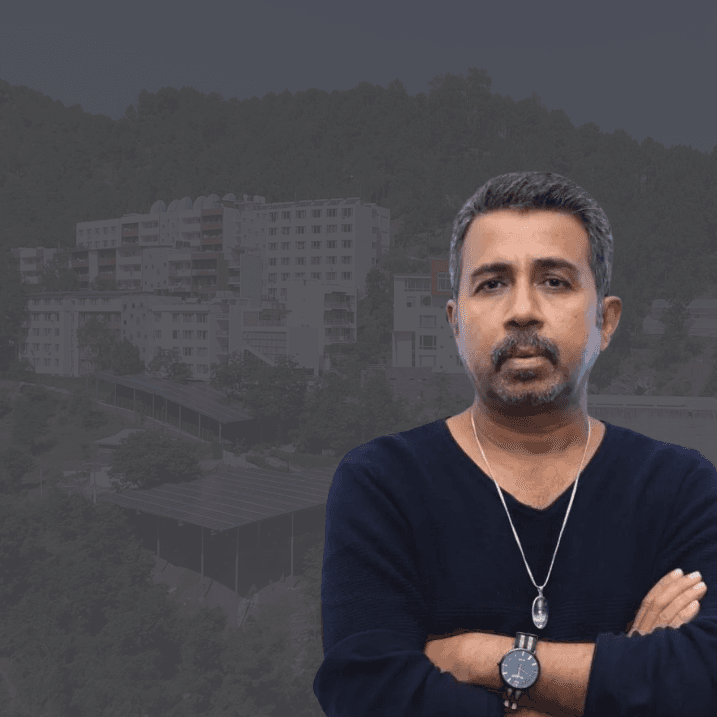
Actor, painter, writer and director Pankaj Jha visited Shoolini during the 6th Annual Literature Festival. In his session, Dilon Ki Panchayat, he encouraged students to stop seeking validation on social media and focus on knowing themselves better. He reminded them that real confidence comes from self-awareness.

Think Research

that matches the world’s best universities

  • 2000+ IP Portfolio
  • H-index > 150
  • Field Weighted Citation Impact (FWCI) 2.22
  • No.1 In India in Citations Per Paper
  • 104+ State-of-the-Art Laboratories
  • 11 Centres of Excellence
  • 25 Shoolini Researchers among Top 2% Scientists
Learn Why We are A Top-ranked Research University

Student Voices

testimonials
Kavita Thakur (MBA)

I have been placed with ICICI Bank, one of the top private sector banks in the country. I always dreamed of working in banks or financial sectors and Shoolini has made my dreams come true.

Shoolini Impact

Bharat Pitchathon Puts Startup Ideas to the Test at Shoolini

Ten teams present products ranging from saffron grown without soil to self-heating meals, while student ventures draw interest for corporate gifting

Bharat Pitchathon 5.0

Bharat Pitchathon 5.0

October 10, 2026

Have a great idea? Bring it to the pitch and make it count.

Manchtantra 2026

Manchtantra 2026

October 7, 2026

A lively stage for creativity, performance and student talent.

International Marvel Media Fest 2026

International Marvel Media Fest 2026

September 29, 2026

A global stage for the next generation of media creators. Register Now!

World Pharmacists Day 2026

World Pharmacists Day 2026

September 25, 2026

Raising awareness about medicines, antimicrobial resistance and the role of pharmacists.

Shoolini Marathon

Shoolini Marathon

September 5, 2026

Join us for a run towards a drug-free future.


INDUCTION 2K26

INDUCTION 2K26

August 18, 2026

A warm welcome to new students as they begin life at Shoolini!

5th CEDSA Conclave

5th CEDSA Conclave

June 24, 2026

Two days with the minds building the future of Direct Selling.


HCICC 2.0

HCICC 2.0

June 22, 2026

Bringing together experts to discuss AI and emerging digital innovations.  

Innovation Day

Innovation Day

June 9, 2026

Celebrating the culture of innovation, patents, and research excellence

YSS Children and Teens Camp 2026

YSS Children and Teens Camp 2026

May 31, 2026

Join us for a week where young minds grow, learn, and find their balance.

Science Symposium

Science Symposium

May 22, 2026

Discover what's new in molecular medicine and stem cell research.

Design Exhibition

Design Exhibition

May 6, 2026

Join us as our students display their finest creative and multidisciplinary design work!


Spring Fest 2026

Spring Fest 2026

March 14, 2026

Bringing together literature, culture, and technology in one campus celebration.


Nrityanjali

Nrityanjali

December 9, 2025

Let’s come together to enjoy rhythm, movement, and pure passion!

Valorant Campus Cup

Valorant Campus Cup

December 8, 2025

Gear up for the 2-day esports showdown and win a chance to earn ₹5 lakh!

Ideation Conclave

Ideation Conclave

December 4, 2025

Step Up. Pitch Your Idea. Shape Viksit Bharat @2047!

Biotech & Cancer Biology Webinar

Biotech & Cancer Biology Webinar

November 28, 2025

Join an engaging session with Assoc Professor Patricial Muller from Durham University. 

Law Fest 4.0

Law Fest 4.0

November 26, 2025

Be part of the celebration of law, ideas, and innovation!


Design Thinking Workshop

Design Thinking Workshop

November 15, 2025

Join hands-on workshop by IDC School of Design expert Kums P Kumeresan. 

Featured Guest Event

Featured Guest Event

November 14, 2025

Meet and engage with F4 racer Shriya Lohia on campus!

Expert Talk: Dr. Falguni Vasavada

Expert Talk: Dr. Falguni Vasavada

November 11, 2025

Be a part of an insightful session on advertising and personal branding.

Marvel Media Fest 2025

Marvel Media Fest 2025

September 26, 2025

Creativity calls. Register now, media enthusiasts!

Shoolini Marathon 2025

Shoolini Marathon 2025

September 20, 2025

Join us as we take every step together to fight climate change!

Bharat Pitchathon 4.0

Bharat Pitchathon 4.0

September 13, 2025

Pitch your dream, make it real. Register before Sept 3!

Startup Marathon (Season 2)

Startup Marathon (Season 2)

August 15, 2025

The Race of Ideas Begins Again. Apply Before Sept 5!

AAIIC 2025

AAIIC 2025

July 11, 2025

Two-Day International Conference on Applied AI and Innovation.

CEDSA Conclave 4.0

CEDSA Conclave 4.0

July 10, 2025

India’s Direct Selling Think Tank Returns!

Faculty Development Program

Faculty Development Program

July 7, 2025

Learning new ways to teach and inspire.

Summer Patent 2025

Summer Patent 2025

June 16, 2025

Patent Your Passion This Summer at Shoolini Campus. 


Summer Lab Program

Summer Lab Program

June 16, 2025

Join us to explore, experiment, and discover science


Paracetamol

Paracetamol

April 24, 2025

A play by Shoolini Creative Studio, coming to your city!

Spring Fest

Spring Fest

March 28, 2025

Get ready for music, magic, and madness—the fest of the year is back!


Convocation 2025

Convocation 2025

March 22, 2025

The countdown to the graduation day begins!


Virtual Masterclass

Virtual Masterclass

February 27, 2025

Join for insights on humanitarian protection & nutrition! 


Prerna Diwas

Prerna Diwas

February 18, 2025

Let's celebrate Chancellor Sir's birthday, a fusion of culture, talent, and community!

HCICC - 25

HCICC - 25

January 8, 2025

Learn and connect at the International Conference on tech & ideas!

Marvel Media Fest 2024

Marvel Media Fest 2024

December 6, 2024

Calling all media enthusiasts! Register for a 2-day Media Fest by Nov 30!

3rd National Law Fest

3rd National Law Fest

November 28, 2024

Join us for engaging events, competitions, and hands-on legal experience!

Science Career Workshop

Science Career Workshop

October 23, 2024

Don't miss the chance to explore exciting career opportunities in science!

2-Day Launch Conference

2-Day Launch Conference

September 20, 2024

CLC, in collaboration with ICF, will bring together industry leaders, coaches & emerging talent.

Student Conclave

Student Conclave

September 7, 2024

Got an innovative idea? Pitch it at the Student Conclave & win Certificates. Register Now!

5-Day eFDP on Research Methodology

5-Day eFDP on Research Methodology

July 29, 2024

Training in basic and advanced research methodology for Social Sciences.


3-Day YSS Spiritual Retreat

3-Day YSS Spiritual Retreat

July 24, 2024

Explore the soul-liberating teachings of Paramahansa Yogananda with 350 devotees.

2-Day HR Conclave on AI Excellence

2-Day HR Conclave on AI Excellence

July 19, 2024

Explore AI's impact on HR: Recruitment, Talent Management, Efficiency.

5-Day Online Faculty Development

5-Day Online Faculty Development

July 9, 2024

Explore advanced applications of AI and GIS in Civil Engineering.

International Conference on AI

International Conference on AI

July 2, 2024

An event on Applied Artificial Intelligence. Submit your papers by 30th April.

INSPIRE Science Camp

INSPIRE Science Camp

July 2, 2024

Join the 5-day powerhouse to boost your research skills

Applied AI International Conference

Applied AI International Conference

July 2, 2024

Join us to discover the latest advancements and research in AI applications!

Seminar

Seminar

May 10, 2024

Theme: Exploring the History of Traditional Medicines in the Himalayas

2-Day National Seminar

2-Day National Seminar

May 10, 2024

Explore the history of traditional medicine in the Himalayas

3-Day National Workshop

3-Day National Workshop

May 8, 2024

Learn about Pre-clinical and Clinical Research in Drug Discovery

Film Screening

Film Screening

April 5, 2024

Meet Ojaswwee Sharma, an award-winning Filmmaker, producer, and Screen-writer. 

Digital Photography Workshop

Digital Photography Workshop

March 22, 2024

Learn the tricks and techniques to improve digital photography skills. 

Virtual International Conference

Virtual International Conference

March 16, 2024

Mindful Trauma Management and Happy Relationships

Spring Fest 2024

Spring Fest 2024

March 15, 2024

Save the dates (15th March -17th March) for the three-day extravaganza!


IEEE YESIST12 -2024

IEEE YESIST12 -2024

March 9, 2024

Join us for the hybrid event and support our journey to the finals in Egypt. The last date to apply is 25th Feb.

Poster Presentation Competition

Poster Presentation Competition

February 28, 2024

Win cash prizes while presenting your groundbreaking concepts! Apply by 12 Feb, 2024.

Workshop and FDP

Workshop and FDP

February 27, 2024

A 5-day workshop on sensitisation on new criminal laws.

International Conference on Tech Advancements

International Conference on Tech Advancements

February 22, 2024

Explore the Technological Advancements for Sustainable Development towards Biodiversity Conservation 


Nurture Program on Generative AI

Nurture Program on Generative AI

January 16, 2024

Week-long program for school students to learn about programming & latest developments in AI.

National Seminar

National Seminar

November 27, 2023

Theme: Plant Biodiversity for Food, Nutrition, and Health Security in North-West Himalayas


National Law Fest

National Law Fest

November 23, 2023

Participate in Moot Courts, Crime Scene Investigations, and thought-provoking competitions.

NHRDN Chapter Launch

NHRDN Chapter Launch

November 18, 2023

Join us for insightful discussions with HR leaders and experts.

Marvel Media Fest

Marvel Media Fest

October 27, 2023

Join the creative fiesta at Shoolini Marvel Media Fest 2023. Register Now!

Convocation 2023

Convocation 2023

October 16, 2023

Get ready to don your cap and gown. Countdown begins!

International Conference

International Conference

October 13, 2023

Be a part of the Inaugural Agriculture Museums Conference at Shoolini.

BIOHACK 2023

BIOHACK 2023

October 7, 2023

Attention all Biotech enthusiasts! Submit your entries by September 20th.

CSLC Museum Inauguration

CSLC Museum Inauguration

October 7, 2023

Let's inspire a new era of curiosity and innovation in Himachal Pradesh.

Manchtantra 2023

Manchtantra 2023

October 4, 2023

Get ready for Manchtantra: The Interdepartmental Battle!

International Workshop

International Workshop

September 26, 2023

Be a part of the International Workshop on Flow Cytometry.

Academic Workshop

Academic Workshop

September 19, 2023

Explore eco-friendly eating and sustainable practices with The University of Melbourne.

2nd CEDSA Conclave

2nd CEDSA Conclave

August 29, 2023

Seize the opportunity to learn from industry icons and influencers.

Poetry, Short Story, One-Act Play Competition

Poetry, Short Story, One-Act Play Competition

August 5, 2023

The countdown has begun, and the final date to submit your entries is 5th August.

Research Methodology Workshop for Engineering

Research Methodology Workshop for Engineering

July 24, 2023

A 7-Day Workshop on Rethinking Paradigms and Mastering Methodologies.

TOC Shoolini Retreat

TOC Shoolini Retreat

July 1, 2023

Learn Professional Innovation through Personal Reflections 

Interactive Session

Interactive Session

June 16, 2023

Bharat ki Drishti me Vikas (The concept of Development from an Indian Perspective).

Shoolini Innovation Day

Shoolini Innovation Day

June 9, 2023

Join us to celebrate Shoolini Innovation Day, an extraordinary ode to Research & Excellence!


Capacity Building and Personality Development Program

Capacity Building and Personality Development Program

June 9, 2023

Participate in a captivating workshop focused on Empowering Girls for a bright future!


Summer Patent School

Summer Patent School

June 4, 2023

Summer Patent School Amidst Himalayan Pine Forest at Shoolini University

Creators' Fest

Creators' Fest

June 2, 2023

Join the magnetic convergence of visionary minds at Creators' Fest 2023.

Shoolini Food Festival

Shoolini Food Festival

May 26, 2023

Fiesta Trail: Celebrate Food, Fun, and Festivities at Shoolini Food Fest 

International Year of Millets

International Year of Millets

May 22, 2023

Celebrate the International Year of Millets with Padma Shri (Dr) Khadar Vali - The Millet Man of India.

HistCon 2023

HistCon 2023

May 20, 2023

Calling all Researchers: Be Part of HistCon & Share Your Latest Findings- Register Now!

Suraj ka Satvan Ghoda

Suraj ka Satvan Ghoda

May 16, 2023

Experience the powerful play 'Suraj ka Satvan Ghoda' at Tagore Theatre

Principals' Conclave

Principals' Conclave

May 13, 2023

Revolutionising Education: Himachal's Principals' Converge to Explore Innovative Approaches

One-day National Seminar on The Science of Happiness

One-day National Seminar on The Science of Happiness

May 10, 2023

Discovering the Science of Happiness: National Seminar at Shoolini University

TEDxShooliniUniversity 2023

TEDxShooliniUniversity 2023

May 6, 2023

Join us for The Domino Effect and be inspired by our elite speaker lineup!

Project Pavitra

Project Pavitra

May 3, 2023

Be a part of a 3-day workshop on Menstrual Health and Hygiene.

Boot Camp On Code Yoga

Boot Camp On Code Yoga

April 24, 2023

Code Yoga: A 3-week boot camp for 3rd year students of BTech CSE

Shoolini Theatre Festival

Shoolini Theatre Festival

April 17, 2023

Experience captivating Indian theatre at Shoolini Theatre Festival 2023!

Moksh 2023

Moksh 2023

March 24, 2023

Mark your calendars & get ready to be a part of the most-awaited annual fest of the year!

Hackathon

Hackathon

March 22, 2023

iHUB Shoolini is organising Hackathon on the Application of AI. 

Lit & Flower Fest

Lit & Flower Fest

March 17, 2023

Step into a world of words & wonder as the Lit & Flower Festival at Shoolini blooms once again! 

Webinar: Scope of Engineering

Webinar: Scope of Engineering

February 7, 2023

Informative webinar to understand the scope of engineering & the best opportunities in the industry.

YouWeCan Cricket Championship

YouWeCan Cricket Championship

February 3, 2023

Join us to support a cause & win exciting memorabilia signed by legendary cricketer Yuvraj Singh.

Christmas Celebrations 2022

Christmas Celebrations 2022

December 23, 2022

Come & enjoy the lovely selfie booth, carols, music, dance, cakes & coffee this Christmas. 

Celebrating National Mathematics Day

Celebrating National Mathematics Day

December 22, 2022

Webinar on the Indian Mathematicians & their Contributions.

Tansen Ki Khoj 2022

Tansen Ki Khoj 2022

November 25, 2022

Get ready to welcome Siddharth Basrur at Shoolini's biggest music festival — Tansen Ki Khoj.

Q?riosity 2022

Q?riosity 2022

November 21, 2022

Be a part of India's largest online quiz and win exciting prizes worth ₹1 lakh.

International Conference on the Reformist Approaches to Human Rights

International Conference on the Reformist Approaches to Human Rights

November 10, 2022

Learn & address human rights issues through reformists & their approaches

Manchtantra 2022

Manchtantra 2022

October 10, 2022

A 3-day non-stop fun interdepartmental fest. 

The Yogananda Guru Series

The Yogananda Guru Series

September 16, 2022

Sustainable & Healthy Foods of the Future: Chef Vikas Chawla.

Let’s Talk Mental Health

Let’s Talk Mental Health

September 13, 2022

Tips to Boost your Inner Strength with Renu Thakur

3-Day Ayurvedic Healing Workshop

3-Day Ayurvedic Healing Workshop

September 5, 2022

Gain the basic knowledge of Ayurveda & its importance in health & healing. 

Brainstorming Session on State of Environment Report - Himachal Pradesh

Brainstorming Session on State of Environment Report - Himachal Pradesh

August 30, 2022

Discussion on emerging environmental challenges for better sustainable development.

Celebrating the 75th Anniversary of India

Celebrating the 75th Anniversary of India

August 26, 2022

A special lecture is organised on India's partition to remember the memories, identities and lessons by Prof. Sachidananda Mohanty. 

Blood Donation Drive

Blood Donation Drive

August 24, 2022

Social Initiative: Donate blood and save a life.

Hands-on-Training Program (STUTI)

Hands-on-Training Program (STUTI)

August 22, 2022

Dept of Science & Technology (Govt. of India) initiative on ‘Recent Approaches & Techniques in Drug Design and Drug Delivery’. 

V-Empower Coaching Program

V-Empower Coaching Program

July 28, 2022

It’s coaching program closing ceremony for the year 2021-22

DST-STUTI Program

DST-STUTI Program

July 21, 2022

Training Program on Techniques in Biotechnology 

Placement Drive

Placement Drive

May 6, 2022

Organised by HPPERC in association with All Himachal State Universities (Govt/Private)

1st International Conference on Financial Crime Studies

1st International Conference on Financial Crime Studies

December 15, 2021

Understanding Financial Crime

21st International MELOW Conference

21st International MELOW Conference

November 12, 2021

Illness, Healing, and The Literary Imagination


2nd Yogananda International Conference

2nd Yogananda International Conference

August 20, 2021

Contemporary Issues in Social Sciences-2021

75th Independence Day

75th Independence Day

August 15, 2021

Let's celebrate this day with pride.

The Great Himalayan Conclave

The Great Himalayan Conclave

July 16, 2021

RISE: The Great Himalayan Conclave

16 July (Friday) - 02:00 pm to 07:00 pm

It is time to build the Himalayas as a global destination for learning and highlight opportunities of higher education in the region. In a first-of-its-kind initiative, QS IGAUGE, in collaboration with Shoolini University and UPES, is organising the Great Himalayan Conclave from July 16.


The RISE Conference will provide a platform to leaders of higher education to connect with their peer group. They will deliberate upon the possible solutions, way forward, and an action plan towards achieving institutional excellence despite the global challenges brought about by the pandemic.


Link for registration:

Here Comes the Sun

Here Comes the Sun

July 1, 2021

Want to get published? Write a story to celebrate life and love.

Health & Happiness

Health & Happiness

June 1, 2021

Online

How to Read Poetry?

How to Read Poetry?

May 25, 2021

Special lecture by English Dean Manju Jaidka

Yogananda Career Academy

Yogananda Career Academy

April 20, 2021

As you are aware that a large number of students in Himachal Pradesh, particularly so from Kangra region,  are keen to do government jobs - be it civil services or defense services.

There being no quality coaching institutes in Himachal Pradesh , the aspirant students out of compulsion go to Chandigarh or Punjab for such a coaching and end up spending a lot of money , not only on coaching but also on their stay and travel to such places. Coaching for civil services takes minimum one year and some students even take it for two years thus spending extra years of their life in preparatory studies.

Shoolini University is opening a career academy - Yogananda Career Academy which will have expert faculties for coaching for civil services exams , both preliminaries and mains, and for Defence Forces UPSC exams and SSB interviews. This will help students at the University, who are pursuing various UG and PG courses and are keen on joining the government in Centre and states at officers' level. Not only will they continue their regular studies but simultaneously be ready to undertake competitive exams. This will help them save precious years and money. University provides a perfect atmosphere to students for preparations for such competitive exams.

The above needs to be given wide publicity among all our students and faculties. Therefore, need your help.

Submitted for your necessary action please.

TEDxShooliniUniversity

TEDxShooliniUniversity

April 16, 2021

METAMORPHOSIS

Lifesciences Seminar

Lifesciences Seminar

April 14, 2021

Prospective of vegetable grafting In India

Webinar: Making Parliament Effective

Webinar: Making Parliament Effective

April 28, 2020

Talk with M.R. Madhavan, President and co-founder PRS Legislative Research

YICCISS

YICCISS

School of Management call for papers for YICCISS Conference.

Latest Blogs

Explore the latest insights and updates in our newest Shoolini University blogs!

What Makes Shoolini’s B Tech Bioinformatics Stand Out?  

Research from the first year, faculty guidance on scientific projects, and support to develop patentable ideas make B Tech Bioinformatics at Shoolini a unique program. With a strong combination of biology, programming and data analysis, students build a solid foundation and learn how to apply these skills.  Applications range from research on blood tests that can help detect some cancers earlier to work that supported COVID-19 vaccine development. In each case, scientists use bioinformatics to make sense of biological data and apply it to healthcare.  This blog looks at how Shoolini prepares students for this field, covering its curriculum, research opportunities, admission requirements and career options.  What Is B Tech Bioinformatics and Who Is It For?  The four-year B Tech Bioinformatics course combines biology and computing, teaching students to analyse biological data and apply it to research. It suits students who enjoy biology, want to understand how living systems work and are keen to learn programming and data analysis. You don't need prior coding experience or advanced biology knowledge to begin; the course builds these skills from the basics.  The course combines genomics, molecular biology, and cell biology with programming in Python and R, machine learning, data analysis, and bioinformatics tools. As students progress, they learn to analyse genomic data, work with sequencing information, and interpret results across medicine, agriculture, and scientific research.  This mix of biology, computing, and data skills also makes bioinformatics graduates valuable across research, healthcare, biotechnology, and related industries.  What Is Happening in Indian Bioinformatics Right Now?  Bioinformatics is helping researchers in India analyse genetic data and apply AI to biological research.  In February 2026, during the India AI Impact Summit, Union Minister Dr Jitendra Singh said that large-scale genome sequencing initiatives supported by the Department of Biotechnology were already AI-enabled. He also announced plans to establish Bio-AI Mulankur hubs in 2026, bringing AI-based predictions and laboratory testing together.  Research institutes are also combining different types of biological and health data. For example, CSIR-CCMB is participating in CSIR’s Phenome India project, which links genetic information from thousands of Indians with clinical data. Projects like this need people who can understand the biology and analyse the data.  Researchers in India can also access global resources such as the AlphaFold Database. In May 2026, EMBL announced that almost 80,000 high-confidence predictions of complexes formed by two different proteins had been added to the AlphaFold Database. The work involved EMBL-EBI, Google DeepMind, NVIDIA and Seoul National University. The database provides access to more than 200 million protein structure predictions.  For students, these projects show how Python programming, machine learning, and protein structure analysis apply to biological research.  What Does the B Tech Bioinformatics Program at Shoolini Cover?  The curriculum starts with the basics of biology and gradually moves towards the computational skills students need to work with biological data. Along the way, students become familiar with tools and methods used in research labs and the biotechnology industry.  Core Areas Covered Across Four Years  Molecular Biology and Genomics: Understanding genes, DNA, cells and biological processes at the molecular level.  Python and R Programming: Learning the programming languages commonly used to analyse and work with biological data.  Bioinformatics Tools: Working with tools such as BLAST, GATK, Galaxy and Bioconductor that are widely used for biological data analysis.  Next-Generation Sequencing: Learning how to work with and interpret data generated through modern DNA sequencing technologies.  Machine Learning for Life Sciences: Understanding how machine learning can be applied to areas such as drug discovery, disease prediction and protein analysis.  Structural Bioinformatics: Studying protein structures and learning about computational tools used to predict and analyse them.  Biostatistics: Building the statistical skills needed to analyse and interpret biological data.  Research Methodology: Learning how to plan research, analyse results and present scientific findings clearly.  The School of Bio-Engineering and Food Technology offers the program. Students also learn in a research-focused university environment, where they can gain exposure to ongoing work in areas such as biotechnology, genomics and computational biology.  What Makes Shoolini's Bioinformatics Program Different?  Three things stand out: research access from year one, a patent culture built into the degree, and faculty who are active researchers.  Research from year one: Most undergraduate programs keep students in classrooms for the first two years before any real research exposure. At Shoolini, a first-year bioinformatics student can work on an actual research project in a DRDO-, DST-, or DAE-sponsored laboratory. That changes the quality of learning and the kind of graduates the program produces.  The IP portfolio: Shoolini has filed 2,000+ intellectual property applications—comprising 1,224 utility patents, 512 design applications, 247 copyrights, and 17 trademarks. This is backed by the One Student, One Patent policy, which guides every student to develop a patentable idea during their time at the university. For a bioinformatics student, that means learning not just to analyse biological data, but to contribute original ideas with real-world applications.  Faculty from active research backgrounds: 25 scientists at Shoolini appear on Stanford University's list of the world's top 2% scientists. The h-index of the university exceeds 150. These are the people supervising bioinformatics research, guiding final-year projects, and teaching the tools students will use in their careers. A lab where faculty actively publish is different from one where research stopped a decade ago.  What Are the Career Options After B Tech Bioinformatics from Shoolini?  A B Tech in Bioinformatics can lead to a range of careers across biotechnology, healthcare, pharmaceuticals, research and technology. The exact role depends on a student’s interests and whether they choose to move towards research, data analysis, AI or clinical applications.  Some of the career options include:  Bioinformatics Analyst: Working with genomic and proteomic data for research, healthcare or biotechnology projects.  Computational Biologist: Using computational methods to study biological systems and solve research problems.  Genomic Data Scientist: Analysing large sequencing datasets generated by hospitals, research centres and genomics companies.  AI and Drug Discovery Researcher: Using machine learning and biological data to support drug discovery and development.  Clinical Data Analyst: Managing and analysing data generated through clinical research and trials.  Research Scientist: Working with organisations such as CSIR, ICMR, ICAR, DBT and other research institutions on projects involving biology and computational analysis.  Salary depends on the role, organisation, skills and experience. As an indicative range, entry-level bioinformatics roles may offer around ₹4–8 LPA, while professionals with a few years of experience can move into higher-paying roles as they develop specialised skills in areas such as genomics, AI and computational biology.  What Are the Eligibility and Admission Requirements?  Straightforward — open to both PCB and PCM students.  10+2 with Physics, Chemistry, and Biology or Mathematics  Minimum 50% aggregate (varies slightly by category)  Admission through JEE Main, CUET, or Shoolini's own entrance process  Students from both science streams are eligible. No prior coding experience is required for admission and programming is taught as part of the degree from year one.  Shoolini University — Rankings and Recognition  For a research-focused program like B Tech Bioinformatics, rankings matter in a specific way. They show whether the faculty are producing research, not just teaching about it.  Shoolini University is ranked 452nd in the world and 10th in India (QS World University Rankings 2027), and is the only Indian private university in the global Top 500. It is the No. 1 private university in India for the fourth consecutive year. In QS Asia University Rankings 2026, it ranks No. 1 in Asia for Citations per Paper. This metric directly reflects the quality of research output. In QS Subject Rankings 2026, Biological Sciences ranks in the 401–450 band globally and 10th in India.  In THE World University Rankings by Subject 2026, Life Sciences is ranked in the 301–400 band globally and No. 3 in India.  It holds NAAC A+ accreditation with a CGPA of 3.33 on a 4-point scale and ranks 69th among universities in India—the only university from Himachal Pradesh in the national top 100 (NIRF 2025).  These rankings directly reflect research quality in the sciences, which a bioinformatics student should consider when choosing where to study. B Tech Bioinformatics.   Sources:  https://www.newsonair.gov.in/union-minister-jitendra-singh-says-india-is-entering-a-new-era-of-genomics-and-gene-therapy  https://neosciencehub.com/csir-ccmb-ramps-up-training-and-talent-for-indias-genomic-future/  https://www.embl.org/news/science-technology/first-complexes-alphafold-database/  FAQs  [wp-faq-schema]

Read More   >
MSc Biotechnology: How Research Skills Can Shape Future Careers in Life Sciences

An MSc Biotechnology helps you develop research skills for careers in drug development, diagnostics, agriculture and other areas of life sciences. It builds on what you studied in your BSc, giving you practice in planning experiments, using laboratory equipment and making sense of results.  Experiments do not always give the results you expect. Checking your methods and working out what to test next are part of learning to do research. These skills prepare you for laboratory and research roles.  India’s bioeconomy reached $195.3 billion in 2025, growing 18% in a single year, according to the India Bioeconomy Report 2026. This includes work on vaccines, diagnostic kits, medicines and crops, all of which need research.  If you enjoyed practical work during your BSc, you may be wondering where that interest could take you. This blog explains the skills the degree teaches, career options after an MSc in Biotechnology, and when you might need a PhD.  What Is MSc Biotechnology?  An MSc Biotechnology is a two-year postgraduate degree in advanced biology and lab research. You study molecular biology, genetics, immunology and genetic engineering. You also learn lab techniques such as polymerase chain reaction (PCR) and cell culture. Graduates work as research associates, quality control analysts, bioinformatics analysts and clinical research associates, or go on to a PhD.  Your BSc gave you a foundation in biology. An MSc takes that knowledge into the lab and shows you how it is used in research and industry.  What Is the Scope of MSc Biotechnology in India?  The growth in India's bioeconomy is spread across many fields. Pharma companies need people to develop and test medicines. Diagnostic labs need people to build and run tests. Agriculture firms work on better seeds and crops. Food and environment companies use biology to make products and treat waste.  Each of these fields needs people with advanced lab and research skills. This is why an MSc Biotechnology in India can prepare you for a range of life science careers.  What Are the Subjects in MSc Biotechnology?  Core subjects usually include:  Molecular biology  Genetics  Cell biology  Biochemistry  Immunology  Genetic engineering  The bigger change from your BSc is how you learn these subjects. You stop only reading about techniques and start using them yourself.  Most good programs also include a dissertation. This is a research project you plan and run on your own, and for many students it is their first taste of research work.  What Skills Do You Learn in MSc Biotechnology?  You build two kinds of skills during the degree.  Lab skills. Depending on the university, you can train in these biotechnology lab skills:  PCR, used to copy and study DNA  Cell culture, used to grow cells for testing and research  Protein purification, used to separate one protein from a mixture  Microbial techniques, used to grow and study microorganisms  Biological data analysis, used to make sense of lab and genetic data  Research skills. A textbook experiment has a known answer. A research experiment does not. You start with a question, read what other scientists have found, design an experiment, collect data and work out what it means. Sometimes the results support your idea. Sometimes they send you back to the start.  Along the way, you learn to:  Read scientific papers carefully instead of accepting every claim  Handle and check data  Keep clear records of your work  Explain your findings to others  Find out why an experiment failed instead of simply repeating it  Samples get contaminated. Results go against what you expected. Learning to deal with these problems calmly is one of the most useful things an MSc teaches, in any biotech job.  What Are the Job Opportunities After MSc Biotechnology?  Many students think biotechnology means a lifetime inside a research lab. Research is one path, but career options after an MSc in Biotechnology are much broader.  Role What You Do Where You Work Research Associate Plan and run experiments with a research team Research institutes, biotech companies Quality Control / Quality Assurance Analyst Test products and check that processes meet standards Pharma and biotech manufacturing units Bioinformatics Analyst Use software to study genetic and biological data Genomics companies, research labs Clinical Research Associate Monitor trials that test new drugs and treatments Hospitals, clinical research organisations Regulatory Affairs Associate Prepare documents needed to get products approved Pharma and medical device companies Biomanufacturing Specialist Help produce vaccines, enzymes and other biological products at scale Vaccine and biologics plants  Research associate and quality control roles are among the most common biotechnology laboratory jobs for MSc graduates. Other options outside the lab include technical writing, product analysis and business development in life science companies.  Before you pick a role, ask yourself which part of science you enjoy doing day to day. Your answer will quickly narrow your choices.  What Is the Salary After MSc Biotechnology in India?  Starting pay depends on your role, the company and the city you work in. According to Internshala, the average salary of a biotechnologist in India is ₹3.9 LPA to ₹4.3 LPA, and this range usually applies to entry-level and early career professionals. Naukri puts the starting range for freshers in biotechnology at ₹3 LPA to ₹8 LPA, depending on the role and company.  Pay tends to rise with experience, specialisation and higher studies such as a PhD. Roles that mix biology with data, like bioinformatics, are also worth a look if salary is a priority for you.  Which Is Better After MSc Biotechnology, Job or Research?  Both paths use the same foundation. The difference lies in the kind of work you enjoy.  Research is best if you:  Enjoy studying one problem in depth  Like reading research papers  Are happy to spend long hours in the lab  Want to understand why something happens inside a cell  A job in industry is best if you:  Want to see science turn into products or treatments sooner  Enjoy working with processes, standards and teams  Prefer clear deadlines and defined tasks  You do not have to decide forever at 21 or 22 years of age. Many professionals work in industry for a few years before starting a PhD. Others move from research labs into companies later.  Is PhD Necessary After MSc Biotechnology?  No, not for every career.  A PhD helps if you want to lead your own research, teach at a university or grow into a senior biotech research scientist at a research institute or company.  Many jobs in quality control, clinical research, regulatory affairs, bioinformatics and biomanufacturing hire MSc graduates at the entry level. You can build on this with certifications, short courses and work experience.  Higher studies in biotechnology make sense when your career goal needs them. Choose a PhD for that reason, not because it looks like the next degree in line.  How to Choose the Best College for MSc Biotechnology?  The degree name stays the same everywhere, but the training can differ a lot. Use this checklist.  Labs. Will you use the techniques that research labs and companies use today?  Faculty research. Are professors publishing work in areas like immunology, cancer biology or plant biotechnology?  Dissertation. Does the program include a serious research project of your own?  Alumni outcomes. Where have past students gone? Look for PhD programs, research fellowships and biotech companies.  Collaborations. Can you work with researchers from other universities and countries?  Is Shoolini University Good for MSc Biotechnology?  Here is how Shoolini University answers each point on the checklist.  Labs and research areas. Shoolini has 11 Centres of Excellence, including one in biotechnology. MSc Biotechnology students can work on research in plant biotechnology, animal biotechnology, enzyme technology, immunology and cancer biology.  Faculty research. Shoolini is No. 1 in Asia for Citations per Paper in the QS Asia University Rankings 2026, which means other scientists widely use its research. Nineteen of its scientists feature in Stanford University's list of the World's Top 2% Scientists.  Your own research project. Under the One Student, One Patent policy, every student develops a patentable idea during their time at the university. The university has filed more than 2,000 intellectual property applications, including 1,224 utility patents.  Collaborations. Students can connect with partner institutions such as Lanzhou University in China, Gachon University in Korea, the University of Naples in Italy, and the University of Arkansas and the University of Maryland in the United States.  Rankings. Shoolini is the No. 1 private university in India for the fourth consecutive year. It ranks 452nd in the world and 10th in India in the QS World University Rankings 2027. It is also the only Indian private university in the global Top 500. For life sciences, it ranks No. 3 in India in the THE World University Rankings by Subject 2026 and 10th in India for Biological Sciences in the QS World University Rankings by Subject 2026.  Who can apply. Students with a BSc or B Tech in Biotechnology, Microbiology, Biochemistry or another relevant life or physical science can apply, subject to the program's eligibility rules.  Is MSc Biotechnology Worth It?  Yes, if you want to build life science careers that use lab and research skills.  The degree is most useful when you treat it as training in how science is done. You learn to turn an observation into a question, design an experiment, check whether your data holds up and work out what went wrong when it does not.  These skills can take you into a research lab, a pharma company, clinical research, bioinformatics, biomanufacturing or a PhD. You do not need to know your final career on day one. The degree should help you find the part of biotechnology you want to work in.  MSc Biotechnology Admissions 2026 at Shoolini University are open.  Sources  Business Standard, India's Bioeconomy grows 18% to $195.3 billion in 2025, says report  Internshala, Biotechnologist Salary in India (2026)  Naukri, Highest Paying Jobs in Biotechnology for Freshers (2026)  The Tribune, Shoolini University breaks into QS Global Top 500, retains No. 1 Private University rank in India for fourth consecutive year  FAQs  [wp-faq-schema]

Read More   >
How B Tech CSE at Shoolini Prepares Students for the Future of Technology 

B Tech CSE at Shoolini prepares students for technology careers through programming, specialised study and practical work in labs and projects. Students learn to develop software and apply technologies such as artificial intelligence, data science, cybersecurity and cloud computing.  The course combines a foundation in computer science with options to study specific fields in greater depth. Coursework, projects and certifications help students build technical knowledge and practise using it to solve problems.  What Is a B Tech in Computer Science Engineering?  B Tech CSE is a four-year engineering degree that teaches students to develop software and understand the computing systems that support it.  The B Tech CSE course at Shoolini is offered by the Yogananda School of AI, Computers and Data Science. It covers programming, software development, artificial intelligence, data science, cybersecurity, cloud computing and blockchain. Available B Tech CSE specialisations include AI, Cyber Security and Game Design & AR/VR.  How Are Career Prospects Changing for CSE Graduates?  Career prospects depend on the technical skills graduates can demonstrate. Two recent reports offer context on employment and skills shortages in India.  NASSCOM’s Strategic Review 2026 projected that India’s technology sector would employ close to six million people in FY26. It estimated a net addition of 1,35,000 jobs, representing growth of 2.3% over the previous year. The review also pointed to a shift in hiring priorities, with companies focusing on the mix of skills they need rather than recruitment numbers alone.  ManpowerGroup’s 2026 Talent Shortage Survey found that 82% of employers in India struggled to fill roles. For the first time, AI skills topped the list of skills employers found hardest to source, ahead of traditional engineering and IT skills.  For students assessing B Tech CSE future scope, these findings make practical learning an important part of choosing a course. Projects and technical assignments give students a chance to demonstrate how they approach a problem, develop a solution and test whether it works.  What Will You Study Over Four Years?  The B Tech CSE curriculum at Shoolini includes the following areas.  Programming and software development involves writing, testing and improving code for applications and systems.  Artificial intelligence covers systems that perform tasks such as recognising patterns, generating responses and making recommendations.  Data science involves analysing data to identify patterns and inform decisions.  Cybersecurity focuses on protecting systems, networks and data from attacks.  Cloud computing covers running applications and storing data on servers accessed over the internet.  Blockchain examines shared digital ledgers designed to make records difficult to alter.  Students develop these B Tech CSE skills through coursework, labs and projects, with certifications providing additional learning. When comparing colleges, check how much practical work the course includes and what students are expected to build, test and explain.  Which Specialisation Should You Pick?  Choose a specialisation based on the subjects you enjoy and the kind of work you want to do. The B Tech CSE specialisations at Shoolini cover areas ranging from AI and cybersecurity to game development and bioinformatics.  Across specialisations, students can also work towards software development and full stack development roles. Your specialisation helps you develop expertise in a field, but it does not restrict you to one career.  To narrow your choice, think about the tasks you would enjoy learning.  Data Science may suit you if you enjoy maths, statistics and finding patterns in data. B Tech CSE with AI focuses on building models and applications that learn from data.  Cyber Security involves investigating vulnerabilities and protecting systems from attacks.  UI/UX focuses on how people use digital products. Graphics and Animation centres on visual work, while Game Design & AR/VR combines coding with interactive experiences.  Cloud Computing focuses on the infrastructure that runs applications. DevOps brings together software development and operations through automated testing and deployment.  Bioinformatics combines an interest in biology with programming and data analysis.  Blockchain & IoT covers shared digital records and systems built around connected devices.  Before deciding, compare the subjects and project requirements for each specialisation. A field’s name alone will not tell you how much coding, maths or design it involves.  What Should You Check Before Choosing a College?  Compare B Tech CSE colleges on their teaching facilities, projects and placement records, alongside rankings and accreditation. Here is what Shoolini University offers.  Rankings and Accreditation  In the QS World University Rankings 2027, Shoolini ranks:  No. 1 among private universities in India for the fourth consecutive year  452nd globally and 10th in India  The only Indian private university in the global Top 500  For engineering, it ranks No. 3 in India in the THE World University Rankings by Subject 2026. In the QS subject rankings for Engineering & Technology 2026, it is 17th in India and in the 401–450 global band.  Shoolini also holds NAAC A+ accreditation, with a CGPA of 3.33 out of 4.  Labs and Computing Facilities  Students have access to:  AI & Futures Centre and XR and AI Research Centre, equipped with Meta Quest 2 headsets and high-performance computing systems  High-GPU computing facilities and Apple labs  AI and Robotics Centre developed with Sirena Technologies  AR/VR and IoT labs developed with iHub IIT Roorkee  Certifications: Students can work towards certifications from IBM, AWS, Google, Microsoft, Stanford, NYU, Vanderbilt, DeepLearning.AI and ISC².  AWS Academy certifications cover skills relevant to cloud computing and AI roles.  Projects and Faculty: Collaborations with institutions such as Ikigai Lab at IIT Kanpur give students access to practical projects. Faculty members include scholars from IITs, Oxford, PEC and IIMs.  Study Abroad: Dual-degree and semester-exchange options are available through partnerships with:  University of Melbourne  Royal Holloway University of London  University of Edinburgh  University of Dayton  Placements: Shoolini’s engineering placement network covers over 250 companies, including campus recruiters and companies that have hired graduates off campus.  B Tech CSE graduates have secured jobs at Cisco, Dell, Capgemini, Accenture and Cognizant. The highest recorded package for the program is ₹42 lakh per annum at Algo8.  Who Can Apply and How?  For B Tech CSE at Shoolini University, you need at least 60% in Class 12, with Mathematics and any two of these subjects:  Physics, Chemistry, Computer Science, Electronics, Information Technology, Biology, Informatics Practices, Biotechnology, a Technical Vocational Subject, Agriculture, Engineering Graphics, Business Studies or Entrepreneurship.  Apply with a CUET, NEET, JEE or SAT score, or take Shoolini’s multiple-choice entrance test. A faculty interaction follows.  Conclusion  You do not need to have your entire career mapped out before starting B Tech CSE. Look for a program that gives you a strong grounding in computer science and room to try different specialisations. Writing code, building projects and solving problems will help you understand what you enjoy and where you want to take it.  Sources  AICTE data on B Tech enrolment, 2024-25 (Education Post)  NASSCOM, Technology Sector in India: Strategic Review 2026  ManpowerGroup, 2026 Talent Shortage Survey (global release)  ManpowerGroup, 2026 Talent Shortage Survey (India findings, CXOToday)  FAQs  [wp-faq-schema]

Read More   >
Is BA Journalism and Mass Communication a Good Course for Your Career?   

BA Journalism and Mass Communication can be a good choice if you want a career in writing, reporting, broadcasting, public relations or digital media. The degree takes either three or four years to complete, depending on the university and program. Students from any stream can apply after Class 12, subject to the institution’s eligibility requirements. Fees vary across colleges, while earnings depend on your role, skills, employer and experience. This blog covers what the course teaches, eligibility and fees, career options, and what you can expect to earn. What Does a BA Journalism and Mass Communication Course Cover? The course trains you to find a story, report it accurately, and present it across print, television, radio and digital platforms. Core subjects: Reporting, editing, media law and ethics, media history and public relations. Practical training: Newsroom simulations, internships and hands-on production in print, radio, television and digital formats. Electives: Many colleges also offer options like advertising, event management and digital marketing alongside the core journalism subjects. Format: Six semesters for a three-year degree or eight semesters for a four-year degree, usually with internships built into the later semesters. This broad coverage is why the course leads to more than one kind of career. One semester you could cover a mock press conference for a reporting assignment, and the next, edit a radio bulletin down to the second. By the time internships start, these assignments can help you understand which of these formats you enjoy, and which ones just looked interesting on paper. Journalism and Mass Communication in the Age of AI AI is changing how content is produced, while social media is changing how people find news. For students, this makes reporting, verification and digital production important parts of their training. Trust in news has dropped to its lowest level since the Reuters Institute began measuring it in 2015. Its Digital News Report 2026 found that 37% of respondents across the surveyed markets trust most news most of the time, compared with 39% in India. Social media and video platforms are now the most widely used category of news sources, used by 54% of respondents across the surveyed markets. Around 58% of Indian respondents use YouTube for news, showing why video production skills matter for journalism students. The share of respondents using AI chatbots for news increased from 7% in 2025 to 10% in 2026. Among people under 35, the figure was 16%. India’s government has partnered with Google and YouTube to offer 15,000 scholarships for AI training in the creative and media sectors. Separately, Saurabh Dwivedi, former founding editor of The Lallantop, joined The Indian Express Group in January 2026 to lead its Hindi digital content. These changes make fact-checking an essential part of training. AI can write fast, but it cannot always tell you whether something is true. Before applying, check the eligibility requirements and fees at the universities you have shortlisted. What Are the Eligibility Criteria and Fees for BA JMC? BA JMC is open to students from any stream, while fees vary by institution. Eligibility: You need to have passed Class 12 from a recognised board, usually with a minimum of 50–55% marks, depending on the institution. Students from science, commerce or arts can apply. Admissions route: Admission may be based on Class 12 marks, CUET scores or a university entrance test. Some institutions also conduct a personal interview. Fees at private colleges: Typically ₹25,000 to ₹3 lakh per year, depending on the college’s facilities and reputation. Fees at government colleges: Usually much lower, sometimes just a few thousand rupees a year, though seats are limited and competitive. Your career prospects depend on what you do during the degree, including your internships and the portfolio you build, as well as your academic performance. What Is the Scope of BA JMC in India? The scope is wide because the skills apply to news, advertising, PR and digital media. As a journalism course after 12th, BA JMC gives you a foundation that newsrooms, advertising agencies, PR firms and digital media companies value. These employers look for common skills: clear writing, thorough research, and the ability to tell a story that holds attention. Media and communication careers in India have also evolved with the country’s digital media boom. India’s media and entertainment sector reached ₹2.78 trillion in 2025, growing 9% year-on-year, with digital media crossing ₹1 trillion for the first time, according to the FICCI-EY Media & Entertainment Report 2026. For students, this makes digital content and video production relevant areas to gain experience in, alongside traditional print and television. How Does Shoolini University's BA Journalism and Mass Communication Prepare You? Shoolini University is the No. 1 private university in India for the fourth year in a row, and it is ranked 452nd in the world, according to the QS World University Rankings 2027. The journalism and mass communication program at Shoolini is a three-year course run by the School of Media and Communications. Eligibility follows the standard pattern, a minimum of 55% marks in Class 12 from any stream, with admission based on CUET, SAT, or the university's own entrance test, plus a faculty interaction round. Learn Through In-House Media Platforms: Gain hands-on experience with the Shoolini Newsletter, where they conduct interviews, write stories, and work on page layouts. Through Shoolini TV and Shoolini Samvad, they learn how to write and present news, produce videos, and use broadcasting equipment. Radio Shoolini gives students the opportunity to work as anchors and interviewers. Learn From Industry Professionals: Interact with experienced professionals and mentors from leading media and entertainment organisations, including Yash Raj Films, Sony Entertainment, Colors TV, The Indian Express, Aaj Tak, NDTV, India TV, and Reuters. Build Practical Media Skills: Go beyond the classroom with internships, newsroom and studio visits, and workshops covering data journalism, multimedia storytelling, and other emerging areas of media. Explore Careers Across Leading Media Houses: Prepare for diverse career opportunities with recruiters such as The Times of India, The Indian Express, Hindustan Times, ABP, CNN-News18, Dainik Bhaskar, along with leading PR agencies and radio networks. The School of Media and Communications also offers BAJMC specialisations in Event Management, Advertising and PR. The Event Management specialisation covers event planning, team coordination, risk management, resource management, and event design. Students also get to help organise campus events such as Creators’ Fest, Media Fest, Moksh, Manchtantra, and Literature Fest. Students can also participate in Media Marvel Fest and Creators’ Fest, which feature media competitions, sessions with creators, and discussions on technology and media careers. For students who want to work in a newsroom, agency, or media company, the program provides reporting skills, production experience, and industry exposure. For those who want to build an independent YouTube channel, podcast, newsletter, or social media platform, it offers regular practice in researching, scripting, presenting, and publishing content. Conclusion BA Journalism and Mass Communication is a good choice if you want to keep your career options open across news, PR, advertising and digital media. The mix of writing, reporting and production gives you room to try different kinds of work before choosing a direction. What you get out of the degree also depends on how you use your time at college. Assignments, internships and independent projects help you build a portfolio that shows potential employers what you can do. Sources https://reutersinstitute.politics.ox.ac.uk/digital-news-report/2026/dnr-executive-summary https://www.newslaundry.com/2026/01/22/saurabh-dwivedi-to-lead-indian-expresss-hindi-foray https://ficci.in/event-details/16032609205448 https://www.ey.com/en_in/newsroom/2026/03/india-s-media-and-entertainment-sector-grew-9-percent-to-inr-2-point-78-trillion-in-2025-driven-by-digital-and-live-experiences-ficci-ey-report FAQs [wp-faq-schema]

Read More   >
Why Students Should Learn Quantum Computing for Future Tech Careers

If you want to study B Tech CSE, you have probably heard about AI, cybersecurity and data science. Quantum computing may be a name you haven’t heard yet. Words like qubit and superposition make it sound complicated, which is why many students ignore it.  But there are reasons to give it a closer look. India’s National Quantum Mission has ₹6,003.65 crore allocated for 2023–24 to 2030–31. In December 2024, Google’s Willow chip showed that using more qubits for error correction could reduce errors. IBM, TCS and the Andhra Pradesh government have also announced plans to install a quantum computer in Amaravati, where researchers and companies could test potential applications.  Now think about your own timeline. If you start B Tech CSE in 2027, you will finish around 2031. That is when the mission’s current funding period ends. A technology that looks new today could be further developed when you look for your first job. You don’t need to decide on a quantum research career now. Start by understanding what this field is and where a CSE student fits in.  How Do Quantum Computers Work?  Quantum computing is a way of processing information using quantum physics. Conventional computers use bits, which are either 0 or 1. Quantum computers use qubits. A qubit can exist in a combination of the states associated with 0 and 1, called superposition. When measured, it gives one of those two outcomes. Quantum algorithms use this and other quantum properties to tackle certain hard problems, such as studying how molecules behave.  A quantum computer won’t replace your laptop or phone. Researchers are studying how it could help in chemistry, drug discovery, planning and scheduling, and cryptography. Cryptography is the science of protecting information.  Right now, one of the biggest problems is errors. Qubits are sensitive to disturbances, which can disrupt calculations. In Google’s Willow experiments, using larger groups of qubits for error correction reduced errors. Each tested increase in group size roughly halved the error rate.  This is where CSE comes in. Someone has to write the software, design the algorithms, keep the systems safe and connect quantum machines with conventional computers. An algorithm is a step-by-step method for solving a problem. All of this draws on computer science skills.  Why Is India Investing in Quantum Technology?  India is investing in research, equipment and training to develop its own quantum technologies. The National Quantum Mission has four focus areas. These are quantum computing, quantum communication, quantum sensing and metrology (the science of measurement), and quantum materials and devices.  The mission’s four research hubs have been established at IISc Bengaluru, IIT Bombay, IIT Madras and IIT Delhi. The Department of Science and Technology has also worked with AICTE to create curricula for a B Tech minor and an M Tech in quantum technology.  The Amaravati project is part of this wider investment. In May 2025, IBM, TCS and the Andhra Pradesh government announced plans for an IBM Quantum System Two with a 156-qubit Heron processor at the city’s Quantum Valley Tech Park. So quantum computing in India now has government funding, dedicated curricula and a planned computing facility behind it.  How Are Quantum Computers Linked to AI?  AI and quantum computing meet in a field called quantum machine learning. Researchers are testing whether quantum computers can make some machine learning tasks faster. It is still early, and a practical speed advantage for everyday AI tasks has not yet been established.  The good news is that both fields use linear algebra and probability. If you are already learning these subjects and Python for AI, you have a good start for quantum too. You will have new concepts to learn, but some of the maths and programming will already be familiar.  What Does Quantum Mean for Cybersecurity?  Quantum computing and cybersecurity are already connected. Encryption is the lock that protects your logins, payments and messages. A sufficiently powerful quantum computer could break some of these locks in the future. So in August 2024, the US National Institute of Standards and Technology released its first three post-quantum cryptography standards, designed to withstand quantum attacks.  Companies will need engineers to update their systems to meet these new standards. If you like cybersecurity, post-quantum cryptography is an area you could work in.  Where Should a CSE Student Start?  You don’t need a physics book on day one. Quantum computing for CSE students starts with familiar subjects such as programming and maths. Here’s a starting point.  Python. Learn to build small projects. Qiskit from IBM and Cirq from Google both use Python.  Linear algebra and probability. These help you describe quantum states and calculate the probabilities of measurement results.  Algorithms. Learn why some problems are hard for conventional computers.  Quantum basics. Learn what a qubit is, and ideas like superposition, measurement and entanglement.  Quantum programming. Try Qiskit or Cirq. IBM and AWS (through Amazon Braket) let you run small programs on real quantum machines online.  Your direction. As you learn, see whether you prefer software, algorithms or security.  You don’t have to learn everything at once. The programming, maths and algorithm skills you build along the way are useful in AI and cybersecurity too, even if you pick a different path later.  Where Could These Skills Take You?  Let's be realistic. Quantum is an emerging technology career. There aren't thousands of jobs waiting for fresh graduates today. But there aren't enough trained people either. McKinsey research, shared by the World Economic Forum in 2025, found about one qualified candidate for every three quantum jobs.  Role What You Might Do Quantum Software Developer Write and test quantum programs Quantum Algorithm Engineer Build step by step methods for hard problems Post Quantum Security Engineer Make security systems safe against quantum attacks Quantum Research Scientist Research how quantum machines and software work Quantum Hardware Engineer Work on qubits, chips and the parts that control them  As a CSE graduate, software, algorithm and security roles suit you best. Hardware jobs need more physics or electronics. Research jobs may need a master's degree. So think of one quantum course as the first step in a focus area.  What Should You Look for in a University?  You don't need a degree with ‘quantum’ in its name. At the start, strong computer science basics matter more. When you compare the best engineering universities in India, ask these questions.  Does the university offer quantum training? Shoolini's Student Research Council and C-DAC Bangalore ran a seven-day National Quantum Training Program in 2026. It was online. 188 people joined from 68 organisations in India, the US, the UK, the UAE and Singapore. As many as 116 finished the training and 89 earned Certificates of Merit. Participants covered quantum machine learning, quantum cryptography and error correction. They also used Qniverse, a quantum platform built by C-DAC Bangalore. Next, Shoolini plans a National Quantum Informatics Program in December 2026 with C-DAC Bangalore, DigiTod and qBraid. It is also discussing a Centre of Excellence in Quantum Computing.  Can undergraduates do research? Shoolini has a One Student, One Patent policy. Every student develops a patentable idea during their time at the university. The campus has three incubators. The university has also crossed 2,000+ total intellectual property applications. These include patents, designs, copyrights and trademarks.  Are AI and cybersecurity available? Yes. B Tech CSE at the Yogananda School of AI, Computers and Data Science offers Artificial Intelligence, Cyber Security, Cloud Computing, Data Science, Blockchain and IoT, DevOps, Game Design and AR/VR, UI/UX, and Graphics and Animation. AI and Cyber Security connect most closely to quantum machine learning and post-quantum security.  Can you learn outside the syllabus? Students get labs with high-performance GPU computing, Apple labs, and the AI and Robotics Centre built with Sirena Technologies. They can also work towards certifications from IBM, AWS, Google, Microsoft, Stanford, NYU, Vanderbilt, DeepLearning.AI and ISC².  What do the rankings say? Shoolini is ranked 452nd in the world and 10th in India in the QS World University Rankings 2027. It is the only Indian private university in the global Top 500 and the No. 1 private university in India for the fourth consecutive year. It is No. 3 in India for Engineering in the THE World University Rankings by Subject 2026. It is also NAAC A+ accredited, with a CGPA of 3.33 on a 4-point scale.  Where do graduates work? Shoolini's engineering placement network covers 250+ companies. The highest B Tech CSE package on record is ₹42 LPA at Algo8.  Conclusion  You do not need to specialise in quantum computing from the start. Build a strong foundation in computer science first. Learn Python, understand how algorithms work, try AI and cybersecurity, and build projects. Then learn how a qubit works and write a small quantum program.  By 2031, quantum computing may be far ahead of where it is today. Your career may also take you in another direction. Either way, the coding, maths and security skills you build will remain useful.  B Tech CSE admissions at Shoolini University are open.  Sources  Google Quantum AI, Quantum error correction below the surface code threshold, Nature, December 2024  Google Research, Making quantum error correction work  Department of Science and Technology, National Quantum Mission  PIB, Parliament Question: National Quantum Mission, Lok Sabha, 4 February 2026  PIB, Expenditure under National Quantum Mission, 27 March 2025  IBM, IBM, TCS and Government of Andhra Pradesh plans for India's largest quantum computer, 2 May 2025  NIST, NIST releases first 3 finalised post-quantum encryption standards, August 2024  World Economic Forum, How we upskill quantum talent for a quantum-safe future, November 2025  Shoolini University, Shoolini and C-DAC Organise National Quantum Training Program, 11 August 2026  FAQs  [wp-faq-schema]

Read More   >
How to Build a Career in Clinical Research After B Pharmacy 

Before a new medicine reaches a pharmacy shelf, it goes through years of research and testing. This includes clinical trials involving patients and, in some studies, healthy volunteers. Clinical research professionals help plan these studies, monitor their conduct and ensure that the data is recorded accurately. For B Pharmacy graduates, the field offers roles that draw on their knowledge of medicines and patient safety.  India’s contract research organisation market was valued at USD 6.74 billion in 2025 and is projected to reach USD 12 billion by 2035, with an annual growth rate of 6%, according to Market Research Future. Grand View Research valued India’s clinical trials market at USD 1.42 billion in 2024 and expects it to grow at 8% annually from 2025 to 2030. This expansion could increase demand for professionals trained in clinical operations, data management, drug safety and regulatory affairs.  If you are studying B Pharmacy or have recently completed your degree, this blog explains what clinical research involves, the skills and training employers look for and the roles available to graduates. Depending on your career goals in clinical research, you could work in trial monitoring, data management, regulatory affairs or pharmacovigilance. The clinical research industry in India offers several entry points for pharmacy graduates.  What Is the Career Scope in Clinical Research?  Clinical research is the systematic study of medicines, treatments, medical devices and other health interventions in people to assess their safety and effectiveness. B Pharmacy graduates may begin in roles such as clinical trial assistant, clinical data associate, regulatory affairs associate or pharmacovigilance associate. With suitable training and experience, they can progress to positions such as clinical research associate.  A B Pharmacy degree provides a foundation in drug formulation, pharmacology and biochemistry. This knowledge is useful when reviewing study protocols, dosage information, laboratory findings and drug-safety data. Additional training in clinical research practices and regulations can prepare graduates for entry-level B Pharmacy clinical research roles.  A pharmaceutical research career can begin after graduation, although qualifications vary by position. Students interested in a clinical data management career can specialise in handling and reviewing trial data. Others may move into pharmacovigilance, regulatory affairs or the wider drug-development process.  Each role handles a different part of the clinical research process, from managing trial sites and reviewing data to monitoring drug safety and preparing regulatory submissions. Together, these professionals help trials run correctly and support the clinical research industry in India.  Salary ranges are indicative and may vary by employer, location, qualifications and experience.  Each role handles a different part of the clinical research process, from managing trial sites and reviewing data to monitoring drug safety and preparing regulatory submissions. Together, these professionals help trials run correctly and support the clinical research industry in India.  Salary ranges are indicative and may vary by employer, location, qualifications and experience.  Why Clinical Research Is Growing in India  India’s clinical research sector is expanding as regulatory changes, its large patient population and investment in pharmaceutical research make the country an important location for drug development.  Faster approvals: Under the New Drugs and Clinical Trials Rules, 2019, the Central Drugs Standard Control Organisation generally has 90 working days to decide on a clinical trial application. The timeline is 30 working days when the drug is being researched and developed in India and is also proposed to be manufactured and marketed here. These defined timelines give sponsors greater clarity when planning trials and support India’s wider drug development career ecosystem.  Cost and scale: India’s large and varied patient population, lower trial costs and established pharmaceutical sector have made the country an important base for global clinical research. CROs and research organisations such as IQVIA, Parexel, Syngene and Lambda Therapeutic Research have operations in India. Bengaluru, Hyderabad, Mumbai and Pune are among the cities where clinical research and life sciences employers recruit. This gives B Pharmacy graduates possible entry points into internships, trainee positions and B Pharmacy clinical research roles.  Government support: Government initiatives are also supporting pharmaceutical research. The Scheme for Promotion of Research and Innovation in Pharma MedTech Sector focuses on research, innovation and collaboration between industry and academic institutions. Such measures can strengthen the wider ecosystem in which clinical research, regulatory affairs and data-management professionals work.  Skills and Training That Help After B Pharmacy  A B Pharmacy degree provides relevant subject knowledge, but employers may also look for training and practical skills related to clinical trials.  ICH-GCP training: Good Clinical Practice training introduces the ethical and scientific standards used to design, conduct, record and report clinical trials. Familiarity with current ICH-GCP guidelines can strengthen an application for roles in trial coordination or monitoring. It is particularly relevant if your career goals in clinical research include becoming a clinical research associate. Requirements vary by employer and position.  Medical terminology and regulatory writing: Clinical documents follow defined formats and procedures. Knowing the language used in protocols and case report forms can help you understand and prepare trial documentation. This is useful for regulatory affairs and medical writing roles connected with a pharmaceutical research career.  Data tools: Familiarity with the Medical Dictionary for Regulatory Activities, or MedDRA, is useful for data-focused roles. A basic understanding of Excel, electronic data capture systems and safety databases can also help if you are planning a clinical data management career.  Attention to detail: Trial data is checked repeatedly, and errors can affect data quality and regulatory compliance. Employers therefore value candidates who can review documents and data carefully—an important ability in any drug development career.  Not every entry-level role requires all these skills. However, relevant training and practical exposure can strengthen an application and support progression into monitoring, data management or regulatory affairs.  Salary in Clinical Research After B Pharmacy  Clinical research salaries vary by role, employer, location, qualifications and experience. Salary portals and career guides generally place many entry-level roles in India within a broad range of approximately ₹2.5–5 LPA. These figures should be treated as indicative rather than guaranteed.  Pay may increase as professionals gain experience and move into trial monitoring, clinical data management, project management, regulatory affairs or specialised drug-safety roles. However, job titles are not standard across employers. For example, a clinical data associate and a clinical data manager have different responsibilities and salary levels.  Large pharmaceutical and CRO centres such as Bengaluru, Hyderabad, Mumbai and Pune may offer a wider range of positions. For B Pharmacy graduates, the clinical research industry in India provides several career options beyond conventional pharmacy practice.  How to Start Your Career in Clinical Research  A B Pharmacy student or recent graduate can begin with the following steps:  Finish your B Pharmacy degree with a solid grounding in pharmacology and pharmaceutical chemistry. These subjects provide useful background for understanding medicines, dosage, adverse events and drug safety in a pharmaceutical research career.   Take ICH-GCP training or a relevant clinical research course during or after your final year. Check the course content, provider and current guideline version before enrolling. Such training is particularly useful if your career goals in clinical research include trial coordination or monitoring.   Apply for internships or trainee roles at CROs, pharmaceutical companies or hospital trial sites to gain practical exposure. Experience with documentation, study coordination or data handling can strengthen your application for B Pharmacy clinical research roles.   Look for entry-level positions such as clinical trial assistant, clinical research coordinator, data associate, pharmacovigilance associate or regulatory affairs associate. With experience and suitable training, you can move into monitoring, data management or other areas of a drug development career.   Build skills according to the area you want to enter. Students planning a clinical data management career can learn about electronic data capture systems and data review. Those interested in pharmacovigilance or regulatory affairs can seek role-specific training and experience.   Your first position does not have to determine your entire career. As you gain experience, you can move into monitoring, data management, drug safety, regulatory affairs or other areas of clinical research.  Studying B Pharmacy at Shoolini University  Shoolini University is ranked 452nd globally and 10th in India in the QS World University Rankings 2027. According to the rankings, it is also India’s No. 1 private university for the fourth consecutive year. The university holds NAAC A+ accreditation with a CGPA of 3.33.  B Pharmacy admission 2026 at Shoolini is offered through the School of Pharmacy, which is approved by the All India Council for Technical Education (AICTE) and recognised by the Pharmacy Council of India (PCI). The programme includes industrial training at a pharmaceutical company, giving students practical industry exposure before graduation.  Students also have access to the Shoolini Intellectual Property Rights Office, which supports patent filing and commercialisation. Shoolini scientists have also featured in Stanford University and Elsevier’s list of the world’s top 2% of scientists. The university’s placement team works with pharmaceutical and other employers for internships and recruitment.  For students planning a pharmaceutical research career or a drug development career, the combination of industrial training and research infrastructure provides relevant academic and practical exposure.  B Pharmacy admission 2026 at Shoolini University is open.   Conclusion  Clinical research allows B Pharmacy graduates to apply their knowledge of medicines, pharmacology and patient safety to the testing and development of treatments. The expanding clinical research industry in India includes roles in trial coordination, monitoring, pharmacovigilance, regulatory affairs and data management.  If your career goals in clinical research include trial monitoring or a clinical data management career, begin by building a strong foundation during your B Pharmacy degree. Relevant training, practical exposure and familiarity with Good Clinical Practice can help you prepare for entry-level roles and identify the area that suits your interests.  Sources  Market Research Future: India CRO Market Size, Share and Growth Report 2035   Grand View Research: India Clinical Trials Market Size and Industry Report 2030   Central Drugs Standard Control Organisation: New Drugs and Clinical Trials Rules 2019   Department of Pharmaceuticals: Government Schemes   upGrad: Clinical Research Associate Salary in India   FAQ [wp-faq-schema]

Read More   >
Why BSc (Hons) Food Technology at Shoolini Stands Out for Careers?

Every packet of instant noodles, every ready-to-eat meal, every bottle of packaged juice on a supermarket shelf has gone through the hands of a food technologist before it ever reached you. Someone decided how it should be processed, how long it should stay fresh, and how to make sure it is safe to eat.  That work sits at the centre of a fast-growing industry in India, and a BSc (Hons) Food Technology is one of the more direct routes into it. This blog looks at what the course actually involves, what the job market looks like right now, and why the university you choose for it matters.  What Does a BSc (Hons) Food Technology Course Cover?  It combines food science, chemistry, microbiology, and engineering principles to understand how food is processed, preserved, and made safe for consumption.  Students study subjects like food chemistry, food microbiology, food engineering, packaging technology, and quality assurance. The degree is applied by design, so a large part of the coursework involves lab work and practical training rather than only classroom theory. This is one of the reasons Food Technology course after 12th options have grown in popularity among PCB and PCM students alike, since it draws on both biology and applied science.  What Is the Scope of Food Technology in India Right Now?  Very strong, and backed by real government investment rather than just projected growth.  India's food processing industry is projected to reach USD 535 billion by 2025-26, driven by rising domestic consumption, export demand, and the government's push under Make in India for the World. The Production Linked Incentive Scheme for Food Processing, running from 2021-22 to 2026-27 with an outlay of ₹10,900 crore, has already generated around 3.39 lakh direct and indirect jobs, well past its original target. Exports of PLI-supported food products have grown at a compound annual growth rate of over 13% since the scheme began.  Multinational companies including Nestle, Kellogg's, Mars, Kraft, and Del Monte all operate significant food processing and R&D operations in India, alongside a large and growing base of Indian food brands and MSMEs. This is the scope of Food Technology in India that students are actually stepping into, not a theoretical projection.  What Kind of Jobs Can You Get After BSc (Hons) Food Technology?  A wider range than most people expect, spanning private industry, research, and government service.  Career Path What It Involves Food Quality Analyst Testing raw materials and finished products for safety and quality standards Product Development Executive Working on new food products, from concept to shelf Food Safety Officer Regulatory role inspecting and certifying food establishments Research and Development Associate Working on food innovation, shelf-life extension, and process improvement Packaging Technologist Designing packaging that preserves freshness and meets safety norms Regulatory Affairs Executive Ensuring products meet FSSAI and export compliance standards  Food Technology jobs are not limited to factory floors either. Many graduates move into research labs, food innovation teams at large FMCG companies, or regulatory roles that involve working closely with government food safety standards.  Are There Government Jobs in Food Technology?  Yes, and this is one of the more stable, well-defined career paths in the field.  FSSAI, the Food Safety and Standards Authority of India, regularly recruits for posts like Central Food Safety Officer and Technical Officer, with eligibility open to graduates in Food Technology, Biotechnology, Microbiology, and related life sciences. The Food Corporation of India and the Indian Council of Agricultural Research are also major recruiters in this space. Entry-level government positions typically start in the ₹25,000 to ₹40,000 per month range under central pay scale norms, with clear progression as experience builds.  Food technology government jobs tend to appeal to students who want the stability of a regulatory or public sector role rather than the faster pace of private industry, and both paths remain genuinely open throughout a career.  What Does Food Innovation Actually Look Like as a Career?  It means being part of the team that decides what food products actually reach the market, and how.  Food innovation careers involve work like extending a product's shelf life without artificial preservatives, developing healthier versions of popular snacks, or adapting recipes for new markets. India's PLI scheme has specifically encouraged innovation in categories like millet-based products, where sales grew from around ₹345 crore in 2022-23 to over ₹1,845 crore in 2024-25. This kind of growth doesn't happen without food technologists working behind the scenes on formulation, processing, and packaging.  Is Research a Good Career Option After a Degree in Food Technology?  Yes, particularly for students who want to go beyond industry roles and into food science research.  Students interested in research often publish or read work in respected outlets like the Journal of Food Science and Technology, which covers ongoing research in food chemistry, processing methods, and safety standards. A strong BSc (Hons) Food Technology programme, followed by an MSc or PhD, opens the door to research roles in food science institutes, universities, and corporate R&D labs, where the work is less about production and more about developing the next generation of food processing techniques.  What Should You Look for in BSc Hons Food Colleges?  A few things matter more than rankings alone when comparing BSc Hons food colleges.  Access to well-equipped food processing and analysis labs, not just theoretical classrooms  Faculty with genuine research backgrounds in food science, not only teaching experience  Industry tie-ups or internship pipelines with food companies and government food safety bodies  Exposure to real research work, ideally with the chance to publish or contribute to ongoing studies  A track record of graduates moving into both private sector roles and government food technology positions  Why BSc (Hons) Food Technology at Shoolini Stands Out  Shoolini University offers BSc (Hons) Food Technology through its School of Bioengineering and Food Technology. The program combines classroom learning with research and practical training. Students work in dedicated food processing and food analysis laboratories and also have access to the university’s wider biotechnology infrastructure. This places food technology within a larger life sciences ecosystem rather than an isolated department.  Research and publication are encouraged at the undergraduate level. Through Shoolini’s One Student, One Patent policy, students can work on original, patentable ideas instead of limiting their laboratory experience to syllabus-based exercises. This is particularly relevant for those interested in food innovation or postgraduate research.  In the QS World University Rankings 2027, Shoolini is ranked 452nd globally and 10th in India. It is the only private university in the country’s top 10, alongside seven IITs, IISc and Delhi University, and has been ranked the No. 1 private university in India for the fourth consecutive year. Admission to BSc (Hons) Food Technology is open to students from both PCB and PCM backgrounds, based on Class 12 marks or the university’s entrance process. NEET and JEE are not required.  The degree is suited to students who are curious about how food is made safe, tasty and shelf-stable at scale. With the industry growing and receiving government investment, graduates can work in private industry, food innovation, regulatory roles and research. They can also continue with postgraduate studies, making this a field with varied career options and long-term relevance. Sources:  https://www.india-briefing.com/news/india-food-processing-industry-2026-outlook-pli-fdi-44007.html https://www.ibef.org/industry/food-processing https://www.biotecnika.org/2026/06/govt-life-science-jobs-at-fssai/ https://www.deccanchronicle.com/nation/indias-food-processing-sector-set-to-hit-usd-535-bn-by-2026-1902107 FAQ [wp-faq-schema]

Read More   >
Climate-Resilient Farming: How Technology Is Shaping Sustainable Agriculture 

India's agriculture sector is moving away from traditional, input-heavy farming toward data-driven, precision-based methods. Drones, satellite imagery, AI advisories, and biotechnology are now being used to help farmers handle unpredictable weather, reduce water and chemical use, and protect crop yields.  This blog looks at how this shift is happening, what technologies are involved, and what career options it opens for students studying agriculture.  What Is Climate-Resilient Agriculture and Why Does India Need It?  Climate-resilient agriculture helps farms withstand floods, droughts and unpredictable weather without major crop losses.  Indian agriculture remains heavily dependent on increasingly erratic monsoons. Nearly 80% of the country’s freshwater is used for agriculture, while groundwater levels are falling in many regions. Drought-tolerant seeds, soil monitoring and farming methods that use less water and fewer chemicals can reduce these risks and help secure the country’s future food supply.  How Is Technology Changing Farming Right Now?  Drones, AI and real-time data are helping farmers make faster, more precise decisions.  By February 2026, the government’s Digital Agriculture Mission had created Farmer IDs for 8.48 crore farmers and mapped over 28.5 crore plots under the Digital Crop Survey. According to NITI Aayog, AI-based precision farming pilots reduced pesticide and water use by 60–80% in some applications, saved about ₹3,600 per acre on pest control and increased mint yields by nearly 40%. These projects benefited 30,000–40,000 farmers.  Maharashtra’s ₹500 crore MahaAgri-AI Policy uses satellite and drone data to improve early warnings and help farmers prepare for weather-related risks. Technology is also reaching farms through Soil Health Cards, drone-spraying services and mobile advisories.  What Does This Shift Involve?  Five changes are shaping Indian agriculture:  Precision farming: Sensors, satellites and drones help farmers use water, fertilisers and pesticides only where needed.   Climate-resilient crops: Plant breeding and biotechnology are producing varieties that can withstand droughts, floods and diseases.   Drone-based monitoring: Aerial images identify pest attacks and crop stress early.   Soil Health Cards: Soil tests show which nutrients the land needs.   AI-based advisories: Weather, soil and market data are converted into practical guidance for farmers.   India has about 140 million farm holdings, most of them small and marginal. According to Union Minister Dr Jitendra Singh, AI-based advisories could generate an estimated ₹70,000 crore in annual value if each farmer saved even ₹5,000 a year through better timing and pest prediction.  Is There a Real Career in Agriculture Technology?  Yes, and it pays considerably better than most students expect.  Role Sector Typical Salary Agriculture Officer Government ₹30,000–45,000/month Agricultural Development Officer Government ₹35,000–50,000/month ICAR Research Associate Government research Varies by grade Farm Manager (private) Agribusiness ₹40,000–60,000/month Seed Technologist Agri-tech/private ₹50,000–70,000/month Agri-tech Specialist Private sector ₹6–20 LPA with experience  India's agribusiness market is projected to reach USD 24 billion by 2030, and the agri-tech sector is growing at over 25% a year, driven by precision agriculture and the government's AgriStack integration. Agriculture courses after 12th, most commonly a BSc Agriculture course, are the standard entry point into this field, covering agronomy, soil science, plant pathology, crop genetics, and increasingly, digital farming tools. From here, BSc (Hons) Agriculture jobs span government roles through State PSC exams and ICAR recruitment, banking roles through IBPS AFO, and private-sector roles at companies like Mahindra Agri and a fast-growing base of agri-tech startups.  Why Study Agriculture at Shoolini University?  The MS Swaminathan School of Agriculture offers undergraduate, postgraduate and doctoral programs aligned with ICAR guidelines. Its curriculum covers agricultural technology, sustainability and applied research.  Students gain practical experience in specialised facilities such as the food processing laboratory, crop cafeteria, mushroom cultivation unit and milk processing plant. They also have access to more than 104 research laboratories and 11 Centres of Excellence across the campus.  Learning extends to the field. Through collaborations with organisations such as DENESFA, the school conducts programs on sustainable agriculture and rural development. Interactions with farmers from nearby villages help students understand local agricultural challenges and practices.  Agriculture programs at Shoolini include:  BSc (Hons) Agriculture   MSc Agriculture (Agronomy)   MSc Agriculture (Plant Breeding and Genetics)   PhD Agriculture   Graduates have secured positions with companies including Macleods, Mankind, Abbott, Nestlé and Cremica.  In the QS World University Rankings 2027, Shoolini is ranked 452nd globally and 10th in India. It is the only private university in India’s top 10, alongside seven IITs, IISc and the University of Delhi. Sources:  https://www.pib.gov.in/PressNoteDetails.aspx?ModuleId=3&NoteId=157351&reg=3&lang=2  https://www.pib.gov.in/PressReleasePage.aspx?PRID=2231508&reg=3&lang=1  https://www.intelacia.com/2026/07/24/from-fields-to-flight-how-agricultural-drones-are-reshaping-sustainable-farming-in-india/  FAQs  [wp-faq-schema]

Read More   >
Law Students Gain Courtroom Exposure at Solan Lok Adalat 

Students of the School of Law, Shoolini University, observed the justice delivery system during an educational visit to the Lok Adalat at the District Court, Solan, on September 12. The Legal Aid Clinic organised the visit to give students practical insight into alternative dispute resolution and dispute settlement through mutual consent.  The visit connected classroom learning with courtroom practice, allowing students to observe how Lok Adalats facilitate speedy, amicable, and cost-effective dispute resolution. They watched the settlement process and learnt about the judicial and procedural aspects of resolving cases through compromise.  The students attended proceedings involving property and partition disputes, family and matrimonial matters, motor accident compensation claims, money recovery cases, bank and loan matters, compoundable criminal cases and other civil disputes.  They observed proceedings before Abhay Mandiyal, Additional District and Sessions Judge-I; Divya Jyoti Patial, Civil Judge-cum-Chief Judicial Magistrate; Vivek Khanal, Additional District and Sessions Judge-II; Nikita Tahim, Judicial Magistrate First Class; and Sharad Kumar, District and Sessions Judge. The students learnt about the roles of judges and advocates in facilitating settlements, recording statements and helping parties reach mutually acceptable resolutions.  Vineet Kumar, Coordinator, Legal Aid Clinic, coordinated the visit. Dr Ritu Panta and Nidhi Singh, Assistant Professors at the School of Law, accompanied the students.  The Legal Aid Clinic thanked Prof PK Khosla, Chancellor, Shoolini University; Prof Atul Khosla, Vice Chancellor; Prof Kamal Jeet Singh, Dean, School of Law; and Prof Renu Pal Sood for supporting activities related to legal awareness, community engagement and socially relevant legal education.  Prof Kamal Jeet Singh said the visit gave students a meaningful “Classroom to Courtroom” experience and showed them that legal practice extends beyond knowledge of statutes and procedures. He added that observing actual proceedings helped future legal professionals understand the importance of negotiation, conciliation, empathy and responsible participation in the justice delivery process.  Shoolini Team 13 September 2026  

Read More   >
B Tech CSE Cyber Security: Is It the Right Choice for Your Career in 2026? 

Think about how much of your life exists online. Your bank account, photographs, conversations, college records, shopping history and even your identity are connected to digital systems. Most of the time, we do not think about how secure these systems are. That changes when a company reports a data breach, someone’s social media account is hacked or a phishing scam exposes sensitive information. Cyber security professionals work to prevent such incidents. As digital systems become more connected, their work is becoming more complex. Businesses today depend on cloud platforms, mobile applications, APIs, artificial intelligence and connected devices. Every new technology expands what digital systems can do, but it can also create new ways for attackers to gain access. For students considering B Tech CSE Cyber Security in 2026, the field extends far beyond antivirus software and firewalls. India also faces a shortage of trained professionals. The EICTA Consortium at IIT Kanpur estimates that India needs close to one million cyber security professionals but has only around 80,000 qualified experts. The Data Security Council of India’s Indian Cyber Security Skilling Landscape 2025–26 also found that 63% of enterprises reported limited hands-on skills among candidates. So the real question is not whether cyber security has scope. It is whether you enjoy understanding how systems work, identifying where they can fail and learning how to protect them. What Do You Study? A four-year engineering program in cyber security begins with the core subjects that underpin computer science. Students learn programming, computer networks, operating systems, databases, software development and computer architecture. They then move into areas such as cryptography, network security, vulnerability assessment, malware analysis and secure computing. The distinction matters. A short-term cyber security course may focus on a particular tool, technique or certification. An engineering degree provides a broader computer science foundation, helping students understand what they are protecting and why vulnerabilities exist in the first place. Choosing cyber security also does not limit students to one career path. A strong foundation in computer science can lead to roles in software development, networking, cloud computing and other technology fields. Why Is Cyber Security Becoming So Important? The more connected technology becomes, the more important security becomes. Companies are moving their infrastructure to the cloud. Banking and shopping take place through apps. Businesses use APIs to connect platforms, while AI systems process enormous volumes of information. Each of these systems needs protection. The World Economic Forum’s Future of Jobs Report 2025 lists Security Management Specialists among the fastest-growing roles expected in India through 2030, alongside AI and Machine Learning Specialists and Big Data Specialists. Artificial intelligence is changing the field further. ISC2’s 2025 Cybersecurity Workforce Study, based on responses from more than 16,000 professionals worldwide, found that 41% considered AI knowledge a critical skill, while 48% were actively building AI-related capabilities. The study also found that 73% believed AI would create demand for more specialised cyber security roles. For students thinking about AI and Cyber Security careers, this overlap could become increasingly important. Future professionals may use AI to detect threats while also learning how to protect AI-powered systems from attacks. What Areas Can You Explore? Cyber security is much broader than ethical hacking. The commonly discussed 5 types of cyber security cover different parts of a digital defence system. Network security protects networks against unauthorised access and malicious traffic. Application security focuses on weaknesses in websites, software and apps. Cloud security protects cloud infrastructure, workloads and identities. Endpoint security deals with devices such as laptops, smartphones and servers. Data security protects sensitive information through encryption, authentication and access controls. As students gain experience, they can explore specialised areas such as penetration testing, malware analysis, digital forensics, incident response, threat intelligence, cryptography and AI security. You do not have to decide on a specialisation immediately after Class 12. College gives you time to learn about different areas and find out which part of cyber security interests you most. How Can You Start After Class 12? Students researching B Tech Cyber Security after 12th sometimes assume that they should already know ethical hacking or advanced programming. That is not necessary. Mathematics, logical thinking, curiosity and a willingness to understand computers are better starting points. A practical cyber security roadmap begins with programming, mathematics, Linux and computer fundamentals. Students can then move on to computer networks, databases, operating systems and web technologies. Once these foundations are clear, concepts such as cryptography, vulnerability assessment, malware analysis, network defence and cloud security become easier to understand. By the later years of the degree, projects, industry certifications and cyber security internships become particularly valuable. Security cannot be learned entirely from a textbook. Working with logs, network configurations, vulnerabilities and simulated attacks helps students understand how security teams respond when something goes wrong. What Skills Will Employers Look For? One of the biggest mistakes students can make is focusing on advanced security tools before understanding basic computer systems. Start with the fundamentals. Programming and scripting, Linux, computer networks, operating systems, databases and web applications provide the base. From there, students can build knowledge of secure coding, cryptography, vulnerability assessment, cloud security, identity and access management, incident response and malware analysis. The Cyber Security skills 2026 employers are likely to value include the ability to work across multiple systems rather than viewing security in isolation. Communication matters too. Imagine finding a serious vulnerability in a company’s application. Identifying it is only part of the job. You also need to explain what could happen, how serious the risk is and what the organisation should do about it. Technical ability helps you identify the problem. Clear communication helps you explain it and work with others to resolve it. What Happens to Cyber Security Careers as AI Grows? AI will automate parts of cyber security, particularly repetitive monitoring and analysis. But that does not mean cyber security professionals will disappear. AI systems can process large amounts of security data and detect unusual behaviour faster than humans in some situations. At the same time, companies are feeding sensitive information into AI platforms, building AI-powered applications and automating business decisions. These systems can also be attacked. That creates new questions. How do you protect an AI model? What happens if its training data is manipulated? How do you prevent sensitive information from leaking through an AI application? Professionals entering cyber security will increasingly need to understand both sides: how AI can improve security and how AI itself needs to be protected. What Kind of Careers Can You Build? The B Tech Cyber Security scope is much wider than becoming an ethical hacker. Graduates can explore cyber security jobs such as Security Analyst, SOC Analyst, Network Security Engineer, Security Engineer, Cloud Security Associate, Vulnerability Assessment Analyst, Incident Response Analyst and Application Security Engineer. With experience, professionals can move into penetration testing, threat intelligence, digital forensics, security architecture, cryptography, cloud security and AI security. Your first job does not have to decide your entire career. A student might begin in a Security Operations Centre, develop an interest in cloud systems and later move into cloud security architecture. Someone else may start with vulnerability assessment and specialise in application security. Cyber security allows this movement because the underlying skills remain connected. How Does It Compare With Regular CSE? Both start with the same computer science fundamentals, but they part ways on timing. A standard B Tech CSE program keeps things broad — programming, software development, databases, AI and computing systems — and leaves specialisation for later. Cyber security narrows that focus sooner, building in deeper exposure to networks, threats, vulnerabilities and digital defence from year one. Neither option is inherently better. Still weighing software development, AI, data science, cloud computing and security against each other? A standard CSE program gives you room to explore before choosing. Already drawn to networks, system vulnerabilities, cyber attacks and digital defence? Getting an early start means more time to build real expertise. Can Freshers Actually Find Opportunities? Yes, but a degree alone may not be enough. Employers increasingly want evidence that students can apply what they have learned. Projects, security labs, capture-the-flag competitions, certifications and internships can provide that evidence. According to the EICTA Consortium at IIT Kanpur, freshers without an industry certification typically begin at around ₹4–5 LPA in India, while relevant certifications during the degree can strengthen their employment prospects. Students looking for entry-level cyber security jobs should spend their college years building a portfolio rather than waiting until the final semester. A fresher who understands Linux, Python, networking, cloud basics and security concepts can demonstrate these skills through projects and apply for roles such as SOC Analyst, Junior Security Analyst, Network Security Associate or Vulnerability Assessment Analyst. Studying Cyber Security at Shoolini University For students looking for an engineering program with a specialised security focus, Shoolini University offers B Tech CSE Cyber Security through the Yogananda School of AI, Computers and Data Science. Shoolini University is ranked 452nd globally and 10th in India in the QS World University Rankings 2027. This makes it India’s No. 1 private university for the fourth consecutive year. It is also ranked No. 3 in India for Engineering in the THE World University Rankings by Subject 2026 and holds NAAC A+ accreditation with a CGPA of 3.33/4. The four-year program covers phishing prevention, malware, network vulnerabilities and computer system protection. Students can explore research areas including virtualisation, exploit development, malware analysis, core Android and iOS security, and SCADA. Lab infrastructure is supported by the Department of Science and Technology (DST) and HIMCOSTE. Students can also take certification courses through AWS Academy, which can be useful for those interested in cloud computing and cloud security. Applicants must have passed 10+2 with Mathematics as a compulsory subject, along with any two approved subjects, and secured at least 60% marks. Admission is through CUET, NEET, JEE, SAT or Shoolini University’s entrance test, followed by faculty interaction. Shoolini has placement connections with more than 250 recruiting companies across its schools, helping students connect academic learning with industry expectations. Is Cyber Security the Right Choice for You? Cyber security can be a suitable engineering path for students who are interested in how digital systems work and how they can be protected. If you enjoy understanding how computers communicate, figuring out why something stopped working, exploring how systems can be exploited or thinking about how technology can be made safer, cyber security may suit you. The field is also becoming broader. Cloud platforms need security. Mobile applications need security. Financial systems need security. Connected devices need security. AI systems need security too. For students interested in this direction, B Tech CSE Cyber Security provides a combination of computer science fundamentals and specialised security knowledge. The value of the degree will also depend on what students do alongside it, including projects, internships, certifications, practical work and continued learning as technology and cyber threats change. Sources  Data Security Council of India (DSCI), Indian Cyber Security Skilling Landscape 2025–2026 — https://www.dsci.in/resource/content/indian-cyber-security-skilling-landscape-2025-2026  EICTA Consortium, IIT Kanpur, Cybersecurity Jobs in India 2026 — https://www.eicta.iitk.ac.in/knowledge-hub/cyber-security/cybersecurity-jobs  World Economic Forum, Future of Jobs Report 2025 — https://www.weforum.org/publications/the-future-of-jobs-report-2025/digest/  ISC2, 2025 Cybersecurity Workforce Study — https://www.isc2.org/Insights/2025/12/2025-ISC2-Cybersecurity-Workforce-Study  FAQ [wp-faq-schema]

Read More   >